First published 2017
J. G. Ballard (Modern Masters of Science Fiction)
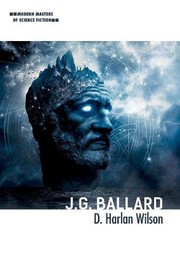
"Prophetic short stories and apocalyptic novels like The Crystal World made J.G. Ballard a foundational figure in the British New Wave. Rejecting the science fiction of rockets and aliens, he explored an inner space of humanity informed by psychiatry and biology and shaped by Surrealism. Later in his career, Ballard's combustible plots and violent imagery spurred controversy--even legal action--while his autobiographical 1984 war novel Empire of the Sun brought him fame. D. Harlan Wilson offers the first career-spanning analysis of an author who helped steer SF in new, if startling, directions. Here was a writer committed to moral ambiguity, one who drowned the world and erected a London high-rise doomed to descend into savagery--and coolly picked apart the characters trapped within each story. Wilson also examines Ballard's methods, his influence on cyberpunk, and the ways his fiction operates within the sphere of our larger culture and within SF itself"-- "In a long and productive career J.G. Ballard (1930-2009) achieved his greatest fame late in life when two of his novels, Crash (1973) and Empire of the Sun (1984) were made into acclaimed and award winning films. But he made his start as a science fiction writer, and throughout his life kept returning to sf genres, tweaking and reinventing them, often with a dystopian cast. The Drowned World (1962) is set in a future that eerily foresaw possible consequences of global warming, with London underwater. The Drought (1965) portrays a desertified earth. The Crystal World (1966) imagines the jungles of Africa attacked by a disease that leads them to take in too many minerals, petrifying them, and the disease spreads from species to species. In these and other novels his main attention has been to how different characters deal with disasters that cannot be overcome. He was declared to be "the voice" of New Wave sf by his famous editor, Michael Moorcock, and is widely honored for his psychological exploration of people under extreme stress. In his concrete trilogy--Crash (1973), Concrete Island (1974), and High-Rise (1975)--Ballard took on another major sf theme: technology and human dependence upon it. Again his palette was dark and his plots combustible"--